

Ezekiel 42:2
“Before the length of an hundred cubits was the north door, and the breadth was fifty cubits.”
Ezekiel 42:2 in 7 translations
- KJVKing James Version
- Before the length of an hundred cubits was the north door, and the breadth was fifty cubits.
- DRADouay–Rheims
- In the face of the north door was the length of a hundred cubits, and the breadth of fifty cubits.
- ASVAmerican Standard Version
- Before the length of a hundred cubits was the north door, and the breadth was fifty cubits.
- DARBYDarby
- before the length of the hundred cubits: the entry was on the north, and the breadth was fifty cubits,
- WEBThe World English Bible
- Before the length of one hundred cubits was the north door, and the breadth was fifty cubits.
- YLTYoung's Literal Translation
- At the front of the length is a hundred cubits at the north opening, and the breadth fifty cubits.
- BPVBiblePics Version
- In front of it was a door that measured one hundred cubits in length and fifty cubits in width.
Context: Ezekiel 42
1Then he brought me forth into the utter court, the way toward the north: and he brought me into the chamber that was over against the separate place, and which was before the building toward the north.
2Before the length of an hundred cubits was the north door, and the breadth was fifty cubits.
3Over against the twenty cubits which were for the inner court, and over against the pavement which was for the utter court, was gallery against gallery in three stories.
4And before the chambers was a walk of ten cubits breadth inward, a way of one cubit; and their doors toward the north.
About Ezekiel 42: The Inner Courts of the Temple
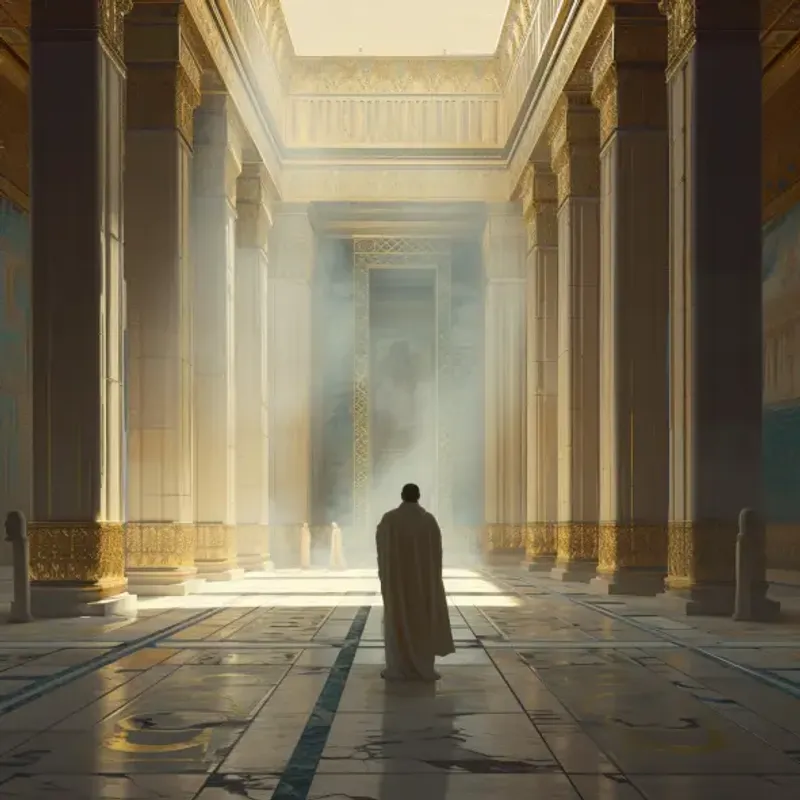
Ezekiel 42 describes the inner courts of the temple, including the chambers for the priests and the preparation rooms for sacrifices. The chapter also details the measurements and dimensions of the various areas, highlighting the precision and intentionality of God's design.
Commentary
While the detailed measurements and specifications of the temple may seem tedious or irrelevant to modern readers, they reveal God's attention to detail and desire for order and holiness. The temple was not just a physical structure, but a symbol of God's presence among his people. Ezekiel's vision of the temple emphasizes the importance of order and reverence in approaching God, both in the physical space of the temple and in our own hearts and minds as we draw near to him.