

Mark 4:29
“But when the fruit is brought forth, immediately he putteth in the sickle, because the harvest is come.”
Mark 4:29 in 7 translations
- KJVKing James Version
- But when the fruit is brought forth, immediately he putteth in the sickle, because the harvest is come.
- DRADouay–Rheims
- And when the fruit is brought forth, immediately he putteth in the sickle, because the harvest is come.
- ASVAmerican Standard Version
- But when the fruit is ripe, straightway he putteth forth the sickle, because the harvest is come.
- DARBYDarby
- But when the fruit is produced, immediately he sends the sickle, for the harvest is come.
- WEBThe World English Bible
- But when the fruit is ripe, immediately he puts forth the sickle, because the harvest has come.
- YLTYoung's Literal Translation
- and whenever the fruit may yield itself, immediately he doth send forth the sickle, because the harvest hath come.'
- BPVBiblePics Version
- But as soon as the grain is ripe, he puts in the sickle, because the harvest has come.”
Context: Mark 4
27And should sleep, and rise night and day, and the seed should spring and grow up, he knoweth not how.
28For the earth bringeth forth fruit of herself; first the blade, then the ear, after that the full corn in the ear.
29But when the fruit is brought forth, immediately he putteth in the sickle, because the harvest is come.
30And he said, Whereunto shall we liken the kingdom of God? or with what comparison shall we compare it?
31It is like a grain of mustard seed, which, when it is sown in the earth, is less than all the seeds that be in the earth:
About Mark 4: The Parable of the Sower
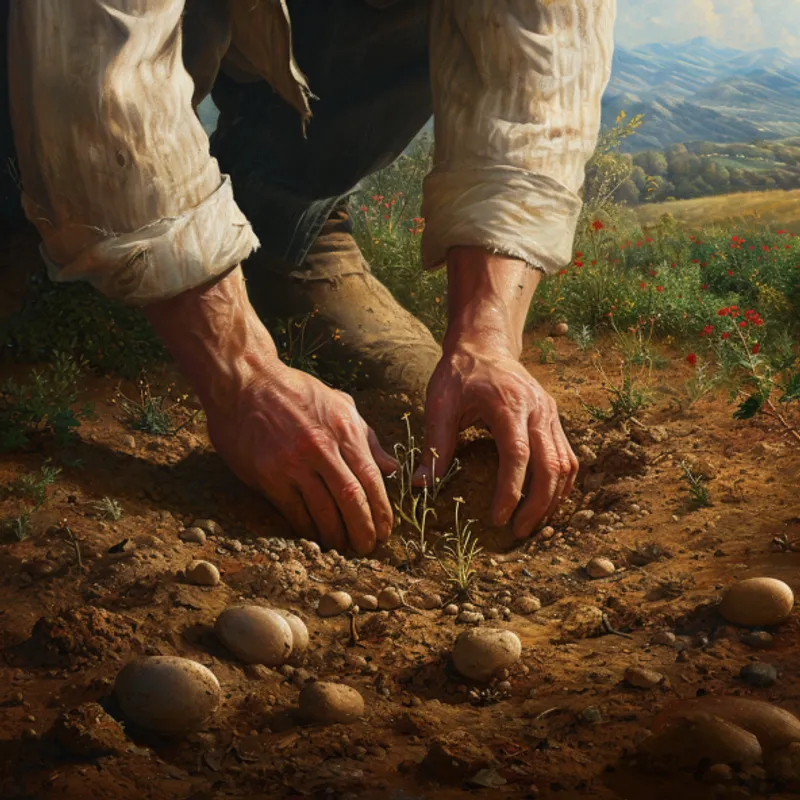
Jesus tells parables about the kingdom of God.
Commentary
Mark 4 is a chapter that focuses on Jesus' teachings about the Kingdom of God. Jesus uses parables to illustrate the Kingdom of God and to explain its mysteries. He begins by telling the parable of the sower, which is a story about a farmer who scatters seed on different types of soil. The seed represents the word of God, and the different types of soil represent different types of people. Jesus explains that some people will accept the word of God and bear fruit, while others will not.