

Judges 21:25
“In those days there was no king in Israel: every man did that which was right in his own eyes.”
Judges 21:25 in 7 translations
- KJVKing James Version
- In those days there was no king in Israel: every man did that which was right in his own eyes.
- DRADouay–Rheims
- In those days there was no king in Israel: but every one did that which seemed right to himself.
- ASVAmerican Standard Version
- In those days there was no king in Israel: every man did that which was right in his own eyes.
- DARBYDarby
- In those days there was no king in Israel; every man did what was right in his own eyes.
- WEBThe World English Bible
- In those days there was no king in Israel: every man did that which was right in his own eyes.
- YLTYoung's Literal Translation
- In those days there is no king in Israel; each doth that which is right in his own eyes.
- BPVBiblePics Version
- In those days, there was no king in Israel; everyone did what was right in their own eyes. ###
Context: Judges 21
23And the children of Benjamin did so, and took them wives, according to their number, of them that danced, whom they caught: and they went and returned unto their inheritance, and repaired the cities, and dwelt in them.
24And the children of Israel departed thence at that time, every man to his tribe and to his family, and they went out from thence every man to his inheritance.
25In those days there was no king in Israel: every man did that which was right in his own eyes.
About Judges 21: Capture of Wives for the Benjamites
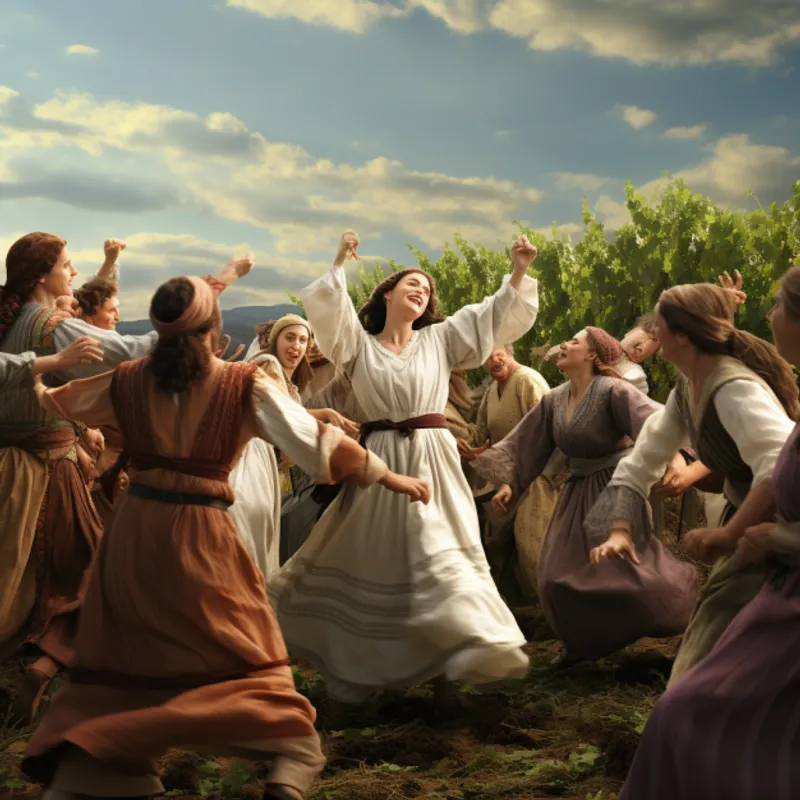
The Israelites regret their actions and work to repopulate the tribe of Benjamin by allowing the remaining Benjaminite men to take wives from a group of women who had gathered at Shiloh.
Commentary
Judges 21 is the final chapter of the book of Judges, and it serves as a fitting conclusion to the tumultuous period of Israelite history that it describes. The chapter begins with the Israelites gathering together in Mizpah to make a solemn vow to God that they will not allow any of their daughters to marry outside of their tribe. This vow is a sign of the Israelites’ commitment to their faith and to their tribal identity, and it serves as a reminder of the importance of maintaining the purity of the Israelite people.